


Peptide Nanoparticles
- HOME
- Peptide Nanoparticles
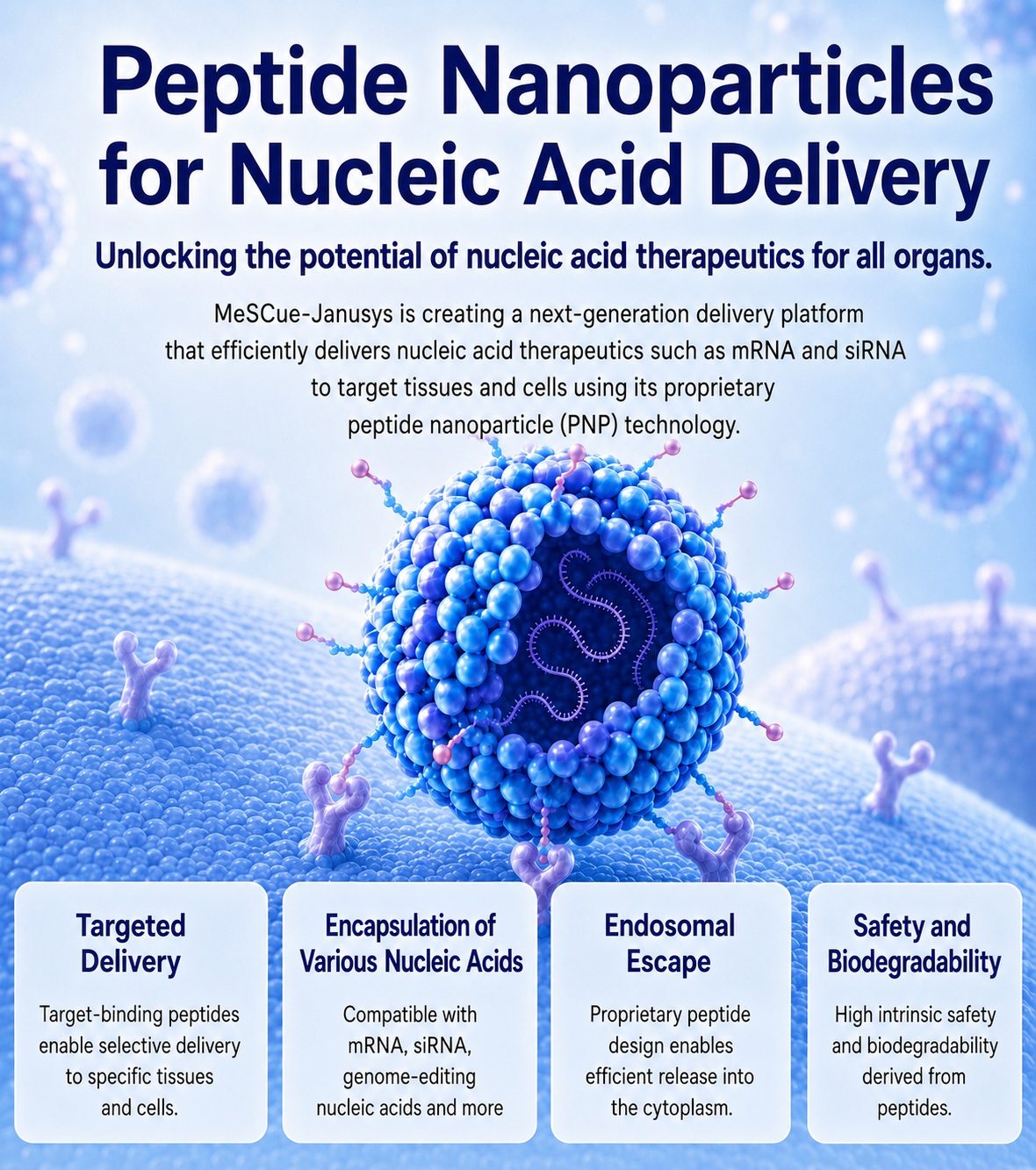
A Novel Nucleic Acid DDS Technology Utilizing the Unique Properties of Peptides
Our proprietary DDS Platform for Delivering Nucleic Acid Therapeutics
MeSCue-Janusys, Inc. is developing a next-generation delivery platform based on its proprietary Peptide Nanoparticle (PNP) technology to deliver nucleic acid therapeutics, including mRNA, siRNA, and genome-editing nucleic acids, to target tissues.
In addition to the conventional concept of using peptides themselves as therapeutic agents, we are developing PNP as a novel DDS technology that utilizes the target-recognition, self-assembly, and cell-penetrating properties of peptides to deliver nucleic acid therapeutics to specific organs and cells.
The Importance of Nucleic Acid DDS Technology
The Key Bottleneck for Nucleic Acid Therapeutics Is Deliver to Target Tissues
Nucleic acid therapeutics, such as mRNA, siRNA, and genome-editing nucleic acids, are expected to open new therapeutic possibilities for diseases that are difficult to address with conventional small-molecule drugs or antibody therapeutics. However, nucleic acids are unstable in vivo and do not readily enter cells on their own. Therefore, they must be combined with DDS technologies that can deliver them into cells within target tissues.
Instability in Vivo
Nucleic acids are easily degraded in the body and do not readily enter cells, making carriers essential for efficient delivery to target cells.
Delivery Beyond the Liver Remains Challenging
LNPs, a widely used nucleic acid DDS technology, tend to accumulate strongly in the liver, creating a need for new technologies that can deliver nucleic acids to extrahepatic tissues.
Intracellular Delivery Is Essential
For nucleic acid therapeutics to exert their effects, they must be taken up by cells and function in the cytoplasm.

To address these challenges, we are developing nucleic acid delivery technology using Peptide Nanoparticles (PNPs) incorporating novel cell-penetrating peptides and target-binding peptides.
Features of PNP
Enabling Nucleic Acid Delivery to Organs and Cells Beyond the Liver
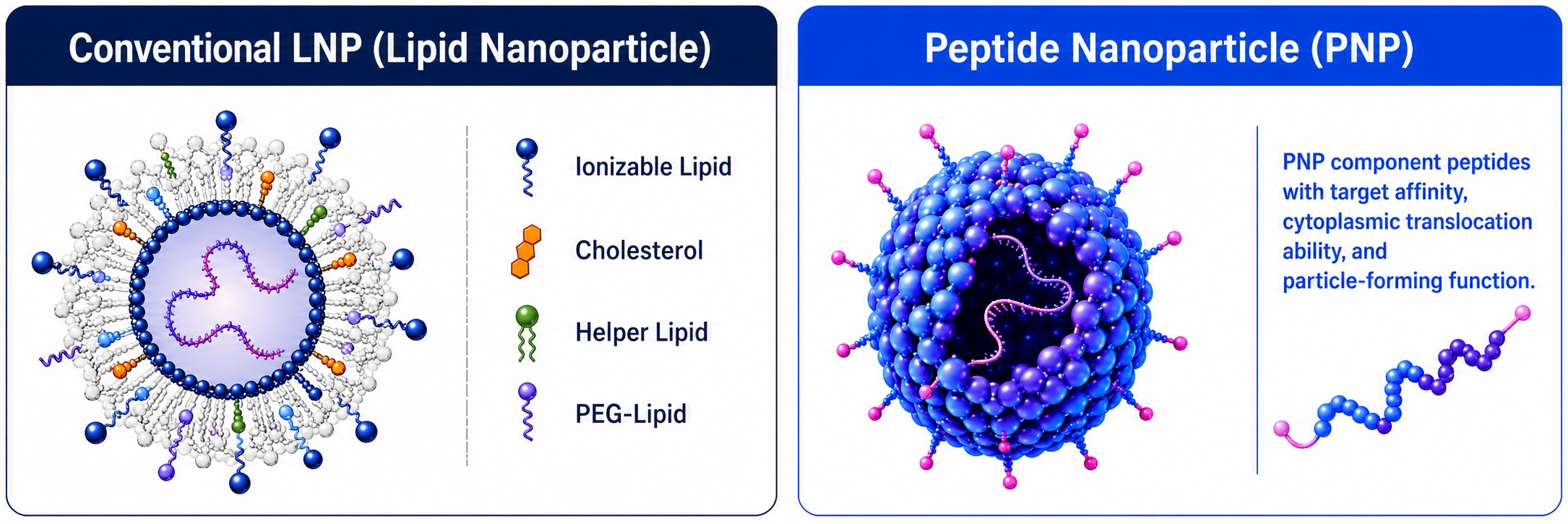
| Conventional LNP | PNP | |
|---|---|---|
| Technology Positioning | A nucleic acid DDS technology with the most advanced practical use, including in mRNA vaccines | A novel nucleic acid DDS technology developed by our company to address the limitations of conventional LNPs |
| Main Materials | Four or more lipid components | Peptide + lipid component(s) (1–2 types) |
| Design Concept | Particle stability and nucleic acid delivery are enhanced by adjusting lipid types and mixing ratios | A single peptide is designed to integrate the functions required for nucleic acid DDS, such as target affinity, cytoplasmic delivery, and particle formation |
| Delivery to Target Organs | Efficient delivery to the liver, but delivery to extrahepatic organs remains difficult | Significantly reduced liver accumulation; selective delivery to target organs may be achieved by modification with affinity peptides |
| Intended Value | A general-purpose carrier for nucleic acid delivery | A modular nucleic acid DDS platform |
Mechanism of Action of PNP
From Intravenous Administration to Intracellular Nucleic Acid Activity in Target Tissues

Blood Circulation
Encapsulation of nucleic acids in PNP helps protect them from degradation in the bloodstream.
Target Cell Recognition
Target-binding peptides enable accumulation in the intended cells.
Endocytosis / Macropinocytosis
Cell-penetrating peptides promote cellular uptake.
Endosomal Escape
Sequence design optimized for endosomal escape improves cytoplasmic delivery efficiency.
Nucleic Acid Release and Activity
Nucleic acids are released into the cytoplasm to exert pharmacological effects such as mRNA expression or siRNA-mediated knockdown.
PNP Platform Enabling Delivery to Various Tissues
Expanding from a Common PNP Core to Multiple Organs and Disease Areas
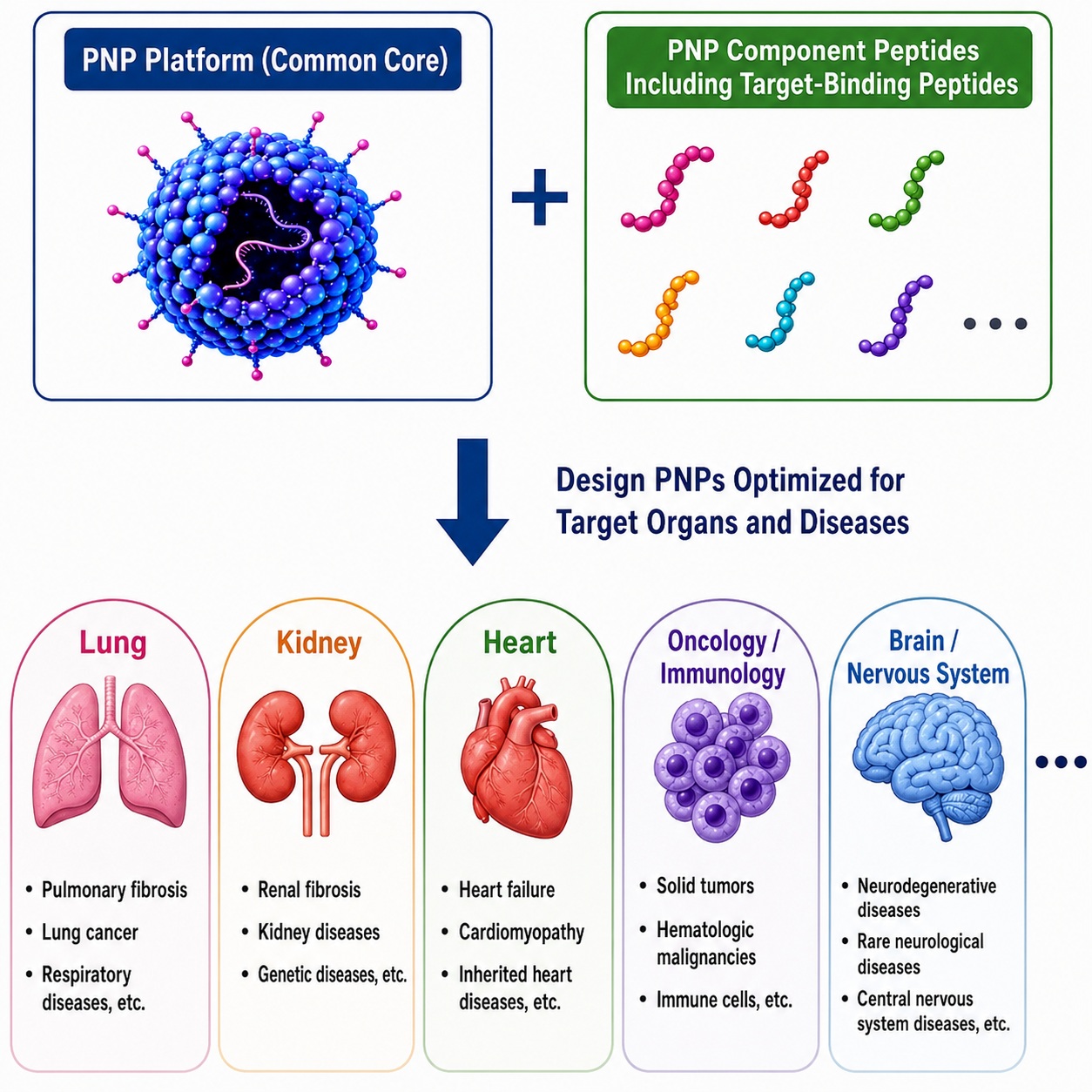
By modifying the core PNP with affinity peptides for target tissues or target cells, we aim to establish a highly expandable next-generation DDS platform technology that enables optimal nucleic acid delivery for each disease area.
PNP Core × Modification with Target-Binding Peptides
We optimize target-binding peptides, particle properties, and intracellular delivery functions for each target tissue and disease area.
We are currently focusing on the development of nucleic acid delivery technology to the lung and kidney as a key extrahepatic target tissue. Going forward, we aim to expand the application of PNP to a broad range of disease areas by identifying and optimizing targeting peptides according to disease characteristics, including those for the kidney, myocardium, and brain/nervous system.
Compatibility with Various Types of Nucleic Acids
mRNA, siRNA, Genome-Editing Nucleic Acids, and More
PNP can encapsulate various types of nucleic acids, including mRNA, siRNA, and genome-editing nucleic acids. Because the requirements for intracellular delivery, nucleic acid release, and pharmacological activity differ depending on the type of nucleic acid, optimization of peptide sequences and particle properties according to the target tissue and target cells is essential.
mRNA
Enables transient expression of target proteins in target cells.
siRNA
Enables suppression and knockdown of disease-related gene expression.
Genome-Editing Nucleic Acids
Enable editing and regulation of specific genes in genomic DNA.
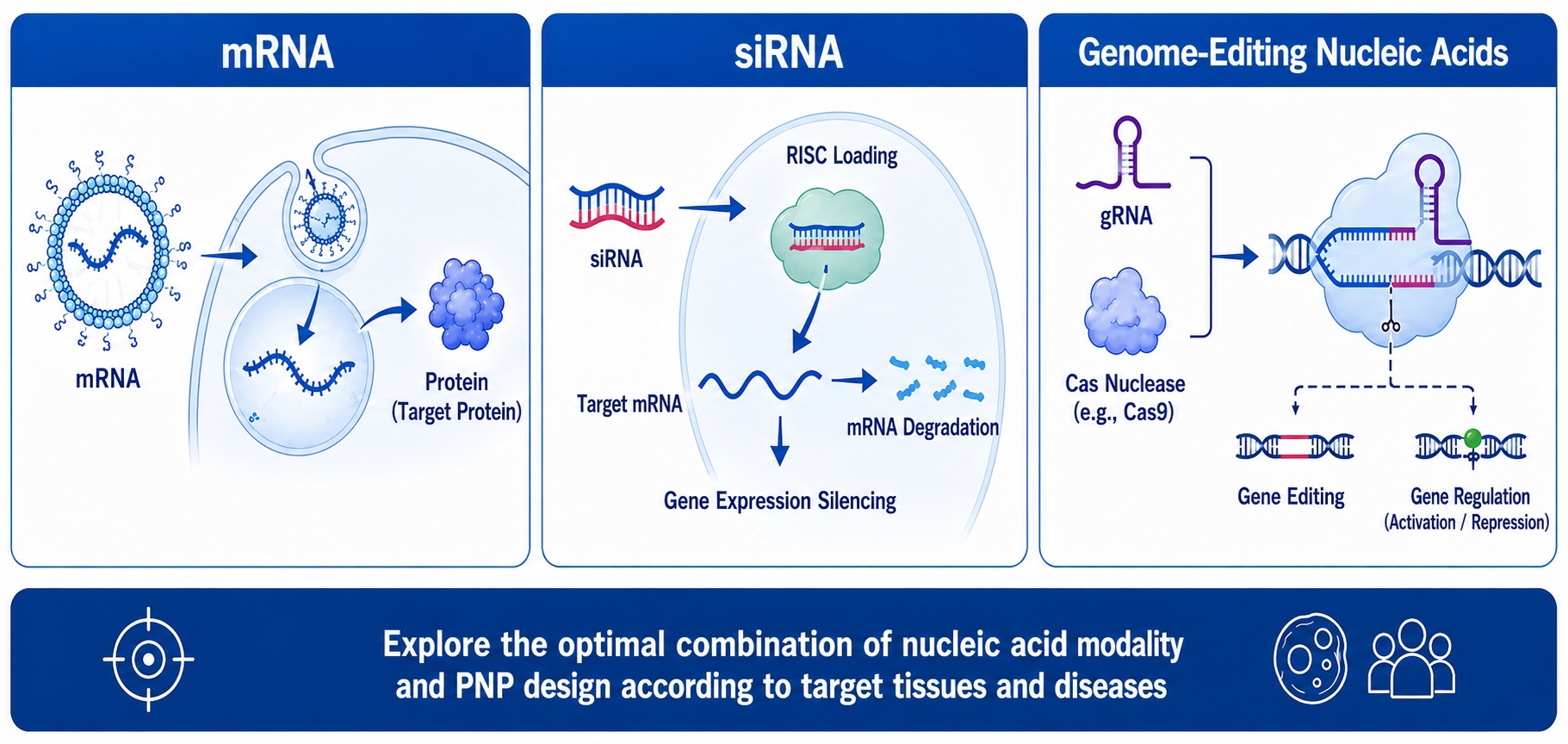
We will continue to advance the application of PNP as a platform technology that expands the potential of nucleic acid therapeutics by optimizing PNP sequence design, particle properties, and intracellular delivery functions according to the target disease, target tissue, and type of nucleic acid.
Collaborative Research and Licensing
We Propose Feasibility Plans According to the Target Disease, Target Tissue, and Type of Nucleic Acid
Through collaborative research with pharmaceutical companies and research institutions, we conduct PNP preparation, particle characterization, in vitro evaluation, and in vivo evaluation according to the target disease, target tissue, and nucleic acid modality.
1. Initial Consultation
Please let us know your target disease, target tissue, type of nucleic acid, and current technical challenges.
2. Initial Design
We propose an initial direction for obtaining target-binding peptides, PNP design, and evaluation systems.
3. Feasibility Plan
We discuss experimental plans and evaluation items with a view toward collaborative research or licensing.
If you provide information on your target tissue and nucleic acid modality, we can propose an initial development direction and feasible evaluation plan.